Wednesday, 10 February 2010

A kingdom of priests...


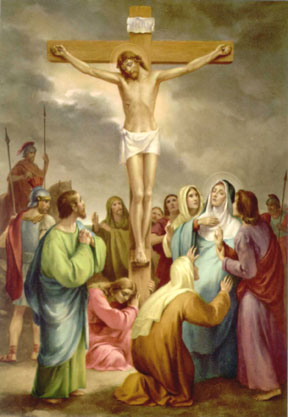
At the last theology in the bar for this semester, Fr Tim spoke of the sacrifice of the Mass. We are very used to the idea of going to Church so w can be fed and nourished, both in God's Word given in scripture, or in the flesh and blood of Jesus in Holy Communion.

But our incredible dignity as Christians is revealed when we share in the sacrifice of Jesus made present in the Eucharistic prayer, made present for us through the consecration of the bread and wine which become the body and blood of Christ.

We do not just receive the fruits of that offering of Jesus - we receive the sacrifice itself, our lives become sacrifice. As we enter that mystery of Jesus dying in love for the whole human race, we are not just passive, but actively participate. If we are suffering, we can unite our suffering with his, so he can use it in his saving love. We can offer that mystery of the cross for those we love, for ourselves, or for the salvation of the whole world.

When we understand what's going on in the Mass, it's strange to think in terms of 'Sunday obligation' at all - what better place can there be, than in that mystery of the love of the Trinity bursting forth on the cross!

Thursday, 4 February 2010

Relationship healing


Under the Old Law in the Old Testament there are certain precepts to establish and maintain relationships. The ceremonial commands are about the relationship with the Other or God: establishing, nourishing and restoring when lost a good relationship.
Christ comes to restore and elevate this relationship from one of creature to Creator to one of children to Father. We have discussed Baptism as the beginning of this restoration - a remaking - but as noted in the comments on that post, people still sin. Our relationships need nourishing and they still need restoring when we mess them up.
The sacrament of Reconciliation or Confession does just this - reconciles us to God and to each other in the Church, the Body of Christ, following our breaking of this tie.
Why do we need to speak to a priest about our failings in order to be reconciled?
To make it real. Part of our tendency to sin is our capacity for self-deception. We hide from ourselves our motivations, our failings, our fault. Speaking our fault brings it to reality and lets it go.
This is real reconciliation. It is real healing for this incomparable relationship with our Father who is in heaven.
    For I am sure that neither death, nor life, nor angels, nor principalities, nor things present, nor things to come, nor powers, nor height, nor depth, nor anything else in all creation, will be able to separate us from the love of God in Christ Jesus our Lord. (Romans 8.38-39)

Sunday, 31 January 2010

What do you think?


Please keep sending in your questions. The reflection on baptism is a short precis of Fr Bruno's talk at Theology in the Bar, which takes place at the Southsider pub every Tuesday evening at 8.15pm.

Thanks for the questions and comments received. Make a comment or send an email to ask a question, start a debate, or state your views.

AA

Friday, 29 January 2010

Who needs salvation?


Christianity emphasises the importance of Baptism for anyone who wants to follow Jesus and be saved. This was Jesus's instruction (John 3.5). Baptism saves us from eternal death and brings us to a new life, a real life in Christ.
But who needs salvation?
'All have sinned and fall short of the glory of God' (Romans 3.23)
In order to understand Baptism, we need also to see that all human beings are flawed, broken, in need of restoration. This re-creation offered by Jesus is found in the washing of Baptism.
Baptism is the Sacrament by which we become Christians. It frees us from Original Sin, makes us children of God, temples of the Holy Spirit and members of the Church.
But it also points forward, allowing true human flourishing by the gifts of faith, hope and love by which God brings us to himself.
We are pilgrims: Christians are in the world but not of the world (cf. John 15.19) and the grace of Baptism begins and points towards the destination of our lives - Jesus Christ. This destination is only reached with God's work. This is begun in Baptism.

Wednesday, 27 January 2010

Church hunt


On Saturday the 23rd January, the CSU organised a sponsored Church hunt across Edinburgh in aid of KTDO. The idea was to try and visit all the 28 catholic parishes listed in Edinburgh in just one day. The event was a great success and raised well over £600, not to mention everyone having a fantastic – although very tiring time – doing it.

The CSU is very busy helping with fundraising for the new Chapel - for more information see

http://keepingthedooropen.op.org

Tuesday, 26 January 2010

The Door is open again


We're starting Almighty Answers again, ready to receive any question about Christianity, from anyone, anytime...

From now on there will be a weekly post to which we will invite questions and comments, and we will also post on the life of the Chaplaincy here at George Square. Tell your friends to drop in to almighty answers....


Tuesday, 8 December 2009

Many thanks


Thanks for your questions the past couple of weeks, those posted on the blog, and those answered by e-mail. We'll be updating the blog again before Christmas, and then next Semester we will be having another "corner a cleric" week and we look forward to receiving your questions then....

Wednesday, 2 December 2009

The cruelty of God?


I can see the point of religion as a way of dealing with the difficulties of life and for finding comfort, but the basic problem of how a good God could let people suffer seems to be a pretty good argument against the existence of God. I'm happy to be spiritual, but I don't see how I can take all those doctrines seriously when we look at the world around us...

Our world with its uniquely universal media, is more exposed to the problem of evil and suffering than at any other time, at least in terms of the extent and range of suffering and pain.

By evil we mean many things: malicious actions by human beings; illness; accidents; the devastation sometimes caused by nature. Although these are really very different things, they all raise the question of the existence of a good and loving God.

At the most basic level, Christianity has never seen good and evil as being the same sort of things. The goodness of things existing is fundamental. Without a real world, there would be nothing and no-one to experience anything in the first place. This is why many Christians talk of evil as being a lack of being, rather than a thing in itself.

This doesn't mean that the experience of suffering isn't real - an absence of floor may be a nothing, but my falling through it will be a pretty real experience to me.

So good and evil are not two contraries eternally wrestling with each other. In fact in some ways, evil can be an inevitable consequence of the good. A lot of what we call evil, is really part and parcel of having a physical world. A world of fast cars and lazy cats, such as our cat Jordan, can lead to a world with flattened fur and whiskers in tire tracks. God did not just make a spiritual world but a real material one where there is always balance, struggle, birth and death, and all of this is a necessary consequence of there being a created physical world.

The evil caused by human beings is on a different level, and raises a problem with no easy answer. Why does God let the wicked go on being wicked, and why do terrible things seem to happen to such good people?

How we are to understand our own struggles with suffering which seem to make God so distant, so distant in fact that he can become a question mark simply hanging over an uncertain world? The best answer we have is the cross of Jesus, where we see that God is closer to us than we are to ourselves, and where we see in the flesh God's power to bring good out of evil, as out of the greatest evil, the crucifixion of the innocent Jesus, he brings our greatest good, the life of the kingdom where evil is conquered.

Evil is not a logical problem, but a human one and deserves a human answer. The best beginning to finding this is also the way to salvation from evil - the cross of Jesus, God and human.

This has been a short answer for a massive question, but it might get the ball rolling....

Thursday, 26 November 2009

Different denominations


This question has been answered by a student from Edinburgh University.

What, essentially, is the difference between High-Anglicanism and Roman Catholicism?

Thank you for your question! I am a student here at the University and a convert to Catholicism. My background was middle-of-the-road Anglican but I often attended Walsingham. Some of the most beautiful spiritual experiences of my life have occurred there in the shrine that the Anglicans have.


It is beautiful and it is, in almost every sense ‘Catholic.’ This is unsurprising since when the strand within Anglicanism known as ‘Anglo-Catholicism’ developed they looked to what the Catholic Church was doing in terms of liturgy and devotion. One could easily mistakenly wander into the Anglican shrine at Walsingham and mistake it for a Catholic Church.

The difference, is as you say, that they don’t mind not having a ‘pope.’ But that difference is far more important than they themselves realise: it comes down to authority. Many within the Anglican communion regard what happens at Walsingham idolatrous. There used to be protests there during the procession of the statue of Our Lady of Walsingham.


As Catholics, however, we can be confident that our practices are the same practices which (with some development, obviously) go right back to the earliest times of the Church. We have the same Faith, again with developments, that streteches far back into the Church’s history. We have our bishop who can trace his lineage back to the Apostles and a Pope who is the symbol of our unity in Christ.


The position of the Pope within the Church might at first seem trivial but it is far more important than many would realise.

Wednesday, 25 November 2009

Mary


Why do Catholics believe that Mary is the Mother of God and give her divine attributes? If she was perfect, how could she be saved?

There have been several questions about the role of Mary in Christianity and the Church’s view of her.

All teachings about Mary tell us something about God and something about humanity. Mary is described as the ‘Mother of God’, because this affirms our belief that Jesus Christ is true God. Not simply by adoption or in part, but fully divine as He is fully human.

Motherhood is a relationship of person to person: a mother is not only mother of the body, or of the physical creature born of her womb, but of the person she begets. Thus having given birth, according to his human nature, to the person of Jesus, who is a divine person, Mary is the Mother of God

Pope John Paul II, 27 November 1996

Catholics do not give Mary divine attributes, nor do they worship Mary. We simply give her honour because of the unique place given her in the work of salvation, to be the Mother of the Saviour. And in giving her honour we give glory to God.

‘You are glorified in your saints, for their glory is the crowing of Your gifts…’

Preface of Holy Men and Women

It is only through the grace and power of God that Mary has such perfection, so it is His plan. For God doesn’t treat people as means, but as good ends in themselves, worthy of value and dignity. God doesn’t use Mary to be a receptacle of his Son, but gives her this true Motherhood as the greatest of gifts.

The perfection of Mary is thus the work of God and the way He saves her. Mary is a creature of God like all other human beings, but unlike all other human beings, she is saved in a preventative manner.

If two people are at risk from a cold and one takes care to prevent such by medicine and sensible living so does not fall ill and the other catches the cold and cures it through medicine following the illness, both have been saved and saved from something outside themselves.

The preservation of Mary from all sin is the unique way God saved her: fitting for the Mother of the Son of God.

Monday, 23 November 2009

Suicide?


Does the Catholic church believe that if you commit suicide you go to hell?

Suicide is a very difficult topic, especially for those who have suffered losing a friend or family member. Suicide can be a sudden act committed out of great despair, or the goal of a long planned trip to a clinic abroad where it is an escape from sufferings perceived to be unendurable in the future. Either way, when we are discussing a suicide we are never speaking in the abstract, but about particular people in very different circumstances.

Speaking of mortal sin and going to hell is speaking in the abstract. If a person freely (without acting through compulsion, illness, addiction etc) choses grave matter (an act which contradicts our human nature so deeply as to reject what God intends for us), and he or she also knows and understands what they are doing, then they commit a mortal sin, which needs the miracle of forgiveness to produce conversion of heart and a new beginning.

Taking any human life, including your own, is indeed a grave act, as contradicting the creative love of God which brought us into existence, and if it were to be done with full knowledge and freedom would constitute a refusal of that eternal love shown to us in Christ.

But when we speak in the particular, we cannot know what is really happening in any human life, and certainly cannot declare any individual to be in hell. We should always trust in the mercy of God who sees all things, and whose mercy is truly just, and who justice is truly merciful

Old Law/ New Law


Why does the church retain some aspects of the old law, for example the prohibition on homosexual behaviour, but not others, for example the kosher laws? How can this be justified?

When we speak of "The Bible" we are in many ways using a misleading phrase. The Scriptures are not one book, like "Great Expectations" or "War and Peace", but a library of texts, some pointing forward to Jesus, the liviing Word of God (the Old Testament), and others reflecting on that Word once it has been experienced (the New Testament).

So reading the Bible calls for different ways of understanding texts, and not expecting every passage to be the same. There are poems, songs, stories, moral advice, letters in the scriptures. And the commandments given in the Law are just as diverse, needing to be read in different ways.

The Church distinguishes in the Old Testament three main types of commandment. There are the moral precepts, which are part of how to live a full human life. All human beings can learn and engage with these teachings, whether it is about not killing, honouring your parents, or the nature of sexuality. These are usually called the moral precepts.

There are also commandments about how to worship, and how to live out justice in the particular circumstances that the people of Israel will experience, living in a particular time and place. These commandments often called the ceremonial and the judicial precepts point us forward to Christ, and although they contain much that can edify and instruct us, they do not apply to us in the same way.

By renewing the people of God, and calling all nations to enter the Church through baptism, the precepts applying to Israel as one nation are taken up and fulfilled in Jesus. But the teachings which reflect on what it means to be human apply now, simply because our human nature remains, even though it now has access in Jesus to the grace which can heal and restore that nature as belonging to God - what it was always supposed to be.

What the Church teaches about human life is for everyone to engage in. Often we find the teaching of the Gospel difficult to follow, but truth spoken by God in Jesus is not a truth to break us or destory us, but to lead us to our true and lasting joy - friendship with the Trinity.


Sunday, 22 November 2009

Questions please...


Already there are many emails and questions arriving for us to tackle here at Almighty Answers. We shall be posting some of our responses in the course of the week. Please feel free to comment on the site with further issues and thoughts for discussion.
Encourage your friends, no matter what their beliefs, to send in questions too.

Thursday, 19 November 2009

ALMIGHTY ANSWERS WEEK


Almighty Answers returns!
We would like to welcome all those returning to this site, for the second series of Almighty Answers when the floor is open for all comments, questions and reponses concerning your views about life, God and what it's all about.
This is an opportunity to ask anything you like from our team. Check out and comment on the site, or email your thoughts: almighty.answers@gmail.com
We're waiting for your questions...

Wednesday, 8 April 2009

Almighty Answer 4: The Real Presence of Jesus now?


If Jesus is really present in the bread and wine of communion, why does he hide himself?

The way we know Jesus is present in the world now after his Ascension is through signs and the Eucharist is the greatest of these signs because he is really present to nourish us.  But his presence is always that of a sign as we journey towards heaven when all signs will be unnecessary.  In the Blessed Sacrament Jesus doesn't hide but shows himself.  But because it is a sign, the way we see him will be through the eyes of faith.  Further, Jesus nourishes us by the Eucharist, really eating and drinking him in the sign of the banquet.  But this is only necessary because we don't yet see him face to face.

Monday, 6 April 2009

Almighty Answer 3: The God of Abraham

Do Christianity and Islam worship the same God?  Can two entirely different kinds of religion be used to worship the same deity?

I think that this issue arises because of a confusion of two aspects of religion. 1. a recognition of what is true 2. the approach to incorporating this truth into our lives.

Monotheistic religions such as Islam and Christianity hold that there is one God. 'The Lord your God, the Lord is One' Deuteronomy 6.4

This also makes sense philosophically, since the omnipotence of God excludes anything that might limit God (so be more powerful). More than one god would limit each other (what one is, the other is not; where one is, the other is not etc...).

If there is only one God, by default, all worship offered to one God must be offered to the same one, even if we argue about who that God is, his revelation and so forth.

It is part of the Christian religion that there is only one God, so there is no possibility that Muslims are worshiping another one, unless of course that god is not God.

From a Christian point of view then, for Muslims to be worshiping God at all, they must be worshiping the only God there is, even if we think they are wrong about who he is and what he has said.

This is the second point. Religions (these religions at least) are not *used* for worship, but are the content of and response to God calling humanity to himself. Yet, this calling has not been universally understood in the same way. So the same God is the object of completely different and competing understandings.

Nevertheless, it might also be worth pointing out that the One God is traditionally called the God of Abraham and Islam considers Abraham to be its father in faith too, although, typically, with quite a different explanation of this truth.

In sum then, Christians and Muslims do worship the same God, but simply because there is only one God to worship. It is just that one of us is worshipping what we don't know (cf. John 4.19-24).

Christianity knows God has revealed himself as Trinity. This revelation is for our good and enables worship to the Father, through the Son, in the Holy Spirit. In this way, God calls us to share in his divine life.

Friday, 3 April 2009

Almighty Answer 2: The Resurrection


When Christ came back from the dead, why was it revealed in such a secret way? Only a few people saw Christ alive and we are grateful for their testimony, but why not march into the High Priest's headquarters and say "I'm back!"?

It is clear from the Acts of the Apostles (10:40) that the fact that Christ appeared only to designated witnesses and not to all the people is no accident. But why did God will it this way? Faith in the risen Jesus means connecting two things: first, really getting to know Jesus, including understanding who and what Jesus was claiming to be through the activities of his ministry; and second, that he was vindicated in all this by God. One could conclude anything from seeing someone risen from the dead; one could conclude all sorts of wrong things - how would anyone know what it meant, and how could people really be certain it was him, unless they very close to him? But Christ appeared to those who had accompanied him before his ministry and had gradually learned from him in his inner circle who and what he was claiming to be. Only such people could have truly benefited from the resurrection, because only they could have understood its meaning. Only they truly understood the message of Jesus, which God was proclaiming (through the resurrection) to be true. Only they could be sure that the risen one really was the Jesus they had known since the beginning of the ministry. (cf. 1 Jn. 1.1-4)  Others could then learn from these official witnesses the true meaning of the resurrection and that it was really was Jesus who was risen, and by designating these witnesses God secured the true interpretation of the resurrection in the apostles’ preaching. These others would of course learn by faith, not having seen, but Christ himself says that blessed are those who have not seen and yet believed, so not to have seen benefits them. (The resurrection body is of course a glorified body. It is still a truly human body, but it is glorified by God's power. For example, Christ will never die again - death has no more power over him. This is why Christ’s glorified human body can appear in a locked room.)

Wednesday, 1 April 2009

Almighty Answer 1: "Original sin", guilt and salvation


What is original sin and why am I responsible for Adam and Eve's mistakes? Why did Jesus have to die? Could there have not been another way?

Original sin is a state of alienation from God, also described as a lack of original justice: that is, being friends with God.  Because it is a privation of righteousness, it is not ‘a thing’ transmitted.  It is rather an incapability to pass on original justice: you can’t pass on what you don’t have!  (Catechism of the Catholic Church no. 404)  So, although you personally, are not morally responsible in the same way as criminal guilt; you share with all humanity the lack of justice, but this is not the personal guilt of a long-dead ancestor such as Adam and Eve.  This justice is restored through Baptism through Jesus’ Passion, Death and Resurrection (cf. Romans 6.3f).

God could have forgiven this selfishness and sin in any way he chose. But the way he chose to bring his forgiveness to us in the death of Jesus comes from his wisdom, and it deals with the whole situation of human sinfulness and selfishness, going right back to our remotest ancestors. When we act selfishly towards others, we distance ourselves from them, but we also distance ourselves from God too, who calls us to a life of self-giving love. In fact the whole human race is in a situation of being at a distance from God - from the very beginnings of the existence of each one of us, we are born into our race's situation of alienation from God. Death in itself is also our ultimate alienation from each other and from God. If the beginnings of the human race in our remotest ancestors had been different, God would have spared us death, and the inheritance of our race would have been entirely different. The fact that we all die follows from the fact that our race chose sin at its beginnings. Sin and death go together. We chose selfishness and sin, and we were not spared death, and we need to be forgiven and restored to life. But forgiveness is not simply a matter of saying someone is forgiven or deciding not to punish them. It means re-establishing the relationship and overcoming the distance and alienation between the two. So for God to forgive us means to come close to us once more, in our human lives and our human death, and to re-establish the relationship across the divide that we have put between ourselves and God. This even means that in Christ God even dies a human death - he comes so close to us in our worst moments - and then conquers that death by rising again. The resurrection then opens up new possibilities for human life - possibilities of selfless living, of death not as alienation from God but as a way of passing to a new life in God, made bodily at the resurrection. If we are moved to sorrow at Christ's death, this can move us to leave sin and death and selfishness behind and want to share in the new life of his resurrection.

Almighty Answers to mighty questions


Soon we shall be publishing a selection of questions that were put to us during 'corner a cleric' week and our answers.  If you have further remarks or questions arising from our thoughts, please use the blog or email your question to the address in the side bar.

We look forward to hearing from you.

Saturday, 28 March 2009

Thank you

Almighty Answers would like to thank all those who have contributed thoughts and comments in the past week, set aside to consider the big questions of life.  If you are still waiting for a response or have more questions and ideas, please continue to use the site.

Over the next few weeks we will be posting some of the most interesting questions allowing you to comment further and build a picture of the issues.

It used to be that everyone thought these questions were important, but today the most fundamental inquiries into human existence and meaning are avoided.  What is essential is to get us talking about them again.

Almighty Answers will be promoting another 'Corner a Cleric' week soon, with daily posts to start you thinking and opportunities to bring those thoughts to light.  Please use the links on this page too for more information.